
LaPlace Resident Records Compared
A useful resident lookup asks what each record can truly confirm. St. John the Baptist Parish has no LaPlace city clerk or city court because LaPlace is unincorporated. Property questions go to the parish assessor and clerk, election questions to the Registrar of Voters, and court files to the Clerk of Court for the 40th Judicial District. State agencies hold vital indexes, business filings, licenses, and confidential certificates. Each source records a different role at a certain time.
| Record | What It Confirms | Where to Search | Access |
|---|---|---|---|
| Assessment and tax roll | Recorded owner, situs, mailing address, parcel clues | St. John SmartCAMA and GIS | Public web search; office fallback |
| Voter portal | Status and precinct route for a validated person or address | Louisiana Secretary of State | Free form; protected fields excluded |
| Court index or file | Party role, case number, filing date, caption | St. John Clerk and 40th JDC | Clerk request; portal or image fees may apply |
| Vital indexes | Historical birth, death, or marriage event lead | Secretary of State and Archives | Index access differs from restricted copies |
| Business and license files | Entity, agent, officer, or credential connection | Secretary of State and licensing boards | Public verification; not residence proof |
Choose the first source from the fact already known. An address fits the assessor. A full name, ZIP, and approximate birth month and year may fit the voter form. A lawsuit or succession belongs with the clerk. For a historical death or birth, the state index can supply a dated lead. Record the source date and the role shown, such as owner, voter result, plaintiff, agent, or index subject. That label keeps the LaPlace resident lookup from turning a loose match into an unsupported claim.
Confirming LaPlace Court Names
The 40th Judicial District Court site publishes calendars, divisions, forms, and court information, but research did not find a public St. John party-name search there. The generic Clerk Connect civil screen shows filters for search type, suit kind, suit cause, date range, suit number, last and first name, and attorney. Its result shell can show suit number, plaintiff, defendant, caption, filing date, cause, and a details link. That interface does not prove live St. John coverage.
Call the St. John Clerk of Court when a name does not appear or when a document is needed. Ask whether civil, criminal, family, probate, or traffic material sits in another index. Trials and courthouse research route to Edgard after the LaPlace court facility closed following Hurricane Ida. The westbank courthouse is at 2393 Highway 18, Edgard, and the clerk also has a LaPlace office. Confirm the case number, date, caption, jurisdiction, and party role before treating a result as the same person.
| Result field | Why it matters |
|---|---|
| Suit number | Identifies one case rather than one name. |
| Plaintiff and defendant | Shows the role assigned in the filing. |
| Caption and cause | Separates unrelated matters and similar names. |
| Date filed | Places the record in a specific time period. |
The generic Clerk Connect civil inquiry shows the captured search layout.
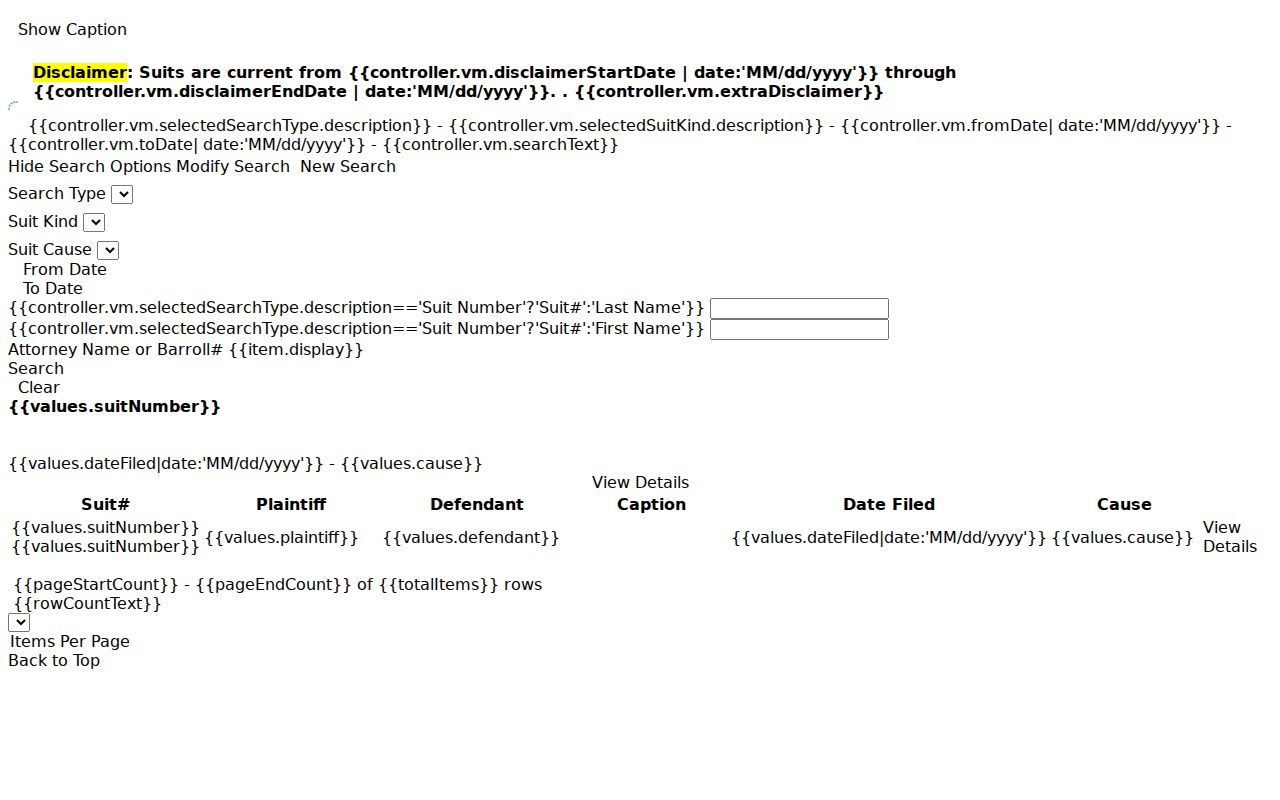
The screen helps explain likely fields, but researchers must confirm current St. John participation with the clerk.
LaPlace Voter Lookup Fields
The Louisiana voter portal can test a tightly defined person. Its individual form requires first name, last name, a five-digit ZIP, and birth month and year in MM/YYYY form. The result is meant for status and precinct use. It is not a household roster, and even a match may lag an update. The separate address lookup takes ZIP, address, an optional apartment or lot, and a city selected from the live list.
The portal is one check within a LaPlace resident lookup, not the last word. Montz in neighboring St. Charles Parish can use the LaPlace postal label and 70068, so confirm the parish before joining voter data to a court or parcel. If a registration is missing or wrong, contact the St. John Registrar at the Government Complex in LaPlace. The registrar, not a nonexistent city clerk, handles corrections and precinct questions.
| Field | Required | Format or use |
|---|---|---|
| First name | Yes | Try a lawful known spelling. |
| Last name | Yes | Use former-name variants separately. |
| ZIP code | Yes | Exactly five digits. |
| Birth month/year | Yes | MM/YYYY, not a full birth date. |
Verify One LaPlace Resident
Build a small evidence trail before reaching a conclusion. Full name, middle initial, suffix, former surname, age range, one dated street, a family tie, or a known case number can separate two people with the same name. A parcel link proves a property relationship, not current occupancy. A voter result reflects an election record. A court filing shows a party role. Keep those meanings separate.
- Anchor the name to a dated place. Use the assessor for an owner or the voter portal for a status and precinct check.
- Search the clerk path with exact and variant names. Narrow by filing dates, case type, and known party role.
- Test the identity against a historical vital index, obituary, business filing, or family record when that source fits the question.
- Request the exact document from its custodian. Ask about current copy fees, certification, delivery, and redactions.
- Docket
- The court's dated list of filings, events, and actions in a case.
- Index vs image
- An index points to a record. An image reproduces the filed page and may cost money.
- Certified copy
- A copy authenticated by the office that holds the original record.
LaPlace Vital Index Leads
Louisiana separates historical indexes from confidential certificates. The state birth index allows last name, first or middle name, parents' names, parish, month, day, and year. Its stated span is 1819 through 1925, with earlier Orleans material. Statewide registration came later, so an index miss does not prove that an event never happened.
The death index lists surname, given name, parish, age, month, day, and year and describes microfilmed deaths from 1911 through 1975, though other Archives pages give conflicting end dates. Verify the live coverage before ordering. The state marriage index is Orleans-focused and routes non-Orleans marriages back to the parish clerk. A divorce judgment is a 40th JDC court file, not a vital certificate.
The Louisiana birth-record ordering page explains who may obtain a confidential certified copy.
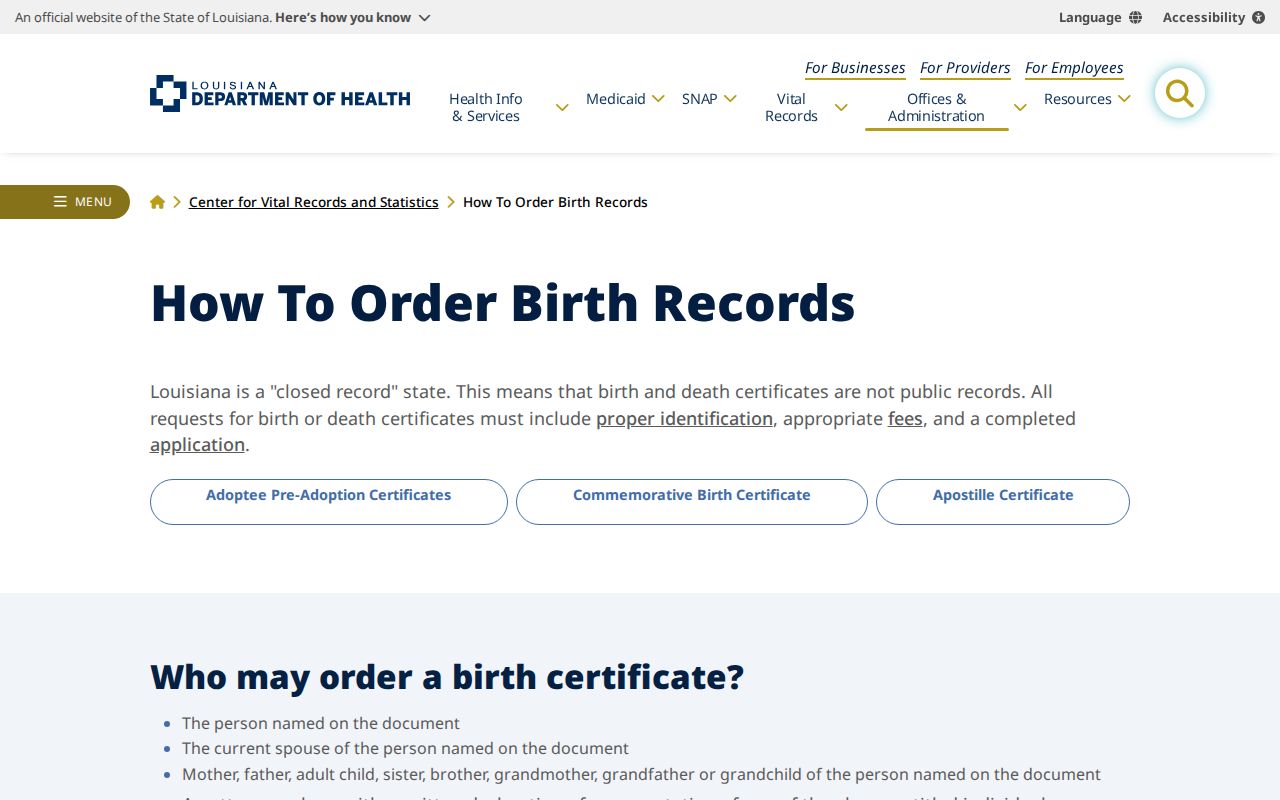
The order screen belongs after a verified index lead because eligibility, identification, fees, and processing rules apply.
Searching LaPlace Birth Names
The birth index supports partial names and parent-name combinations. Select St. John Parish and try spelling variants rather than publishing an exact birth date. Parent fields can distinguish people who share a name. A result is still an event lead, not proof of a later LaPlace address or the right to obtain the certificate.
The official Louisiana birth index provides the search fields pictured here.
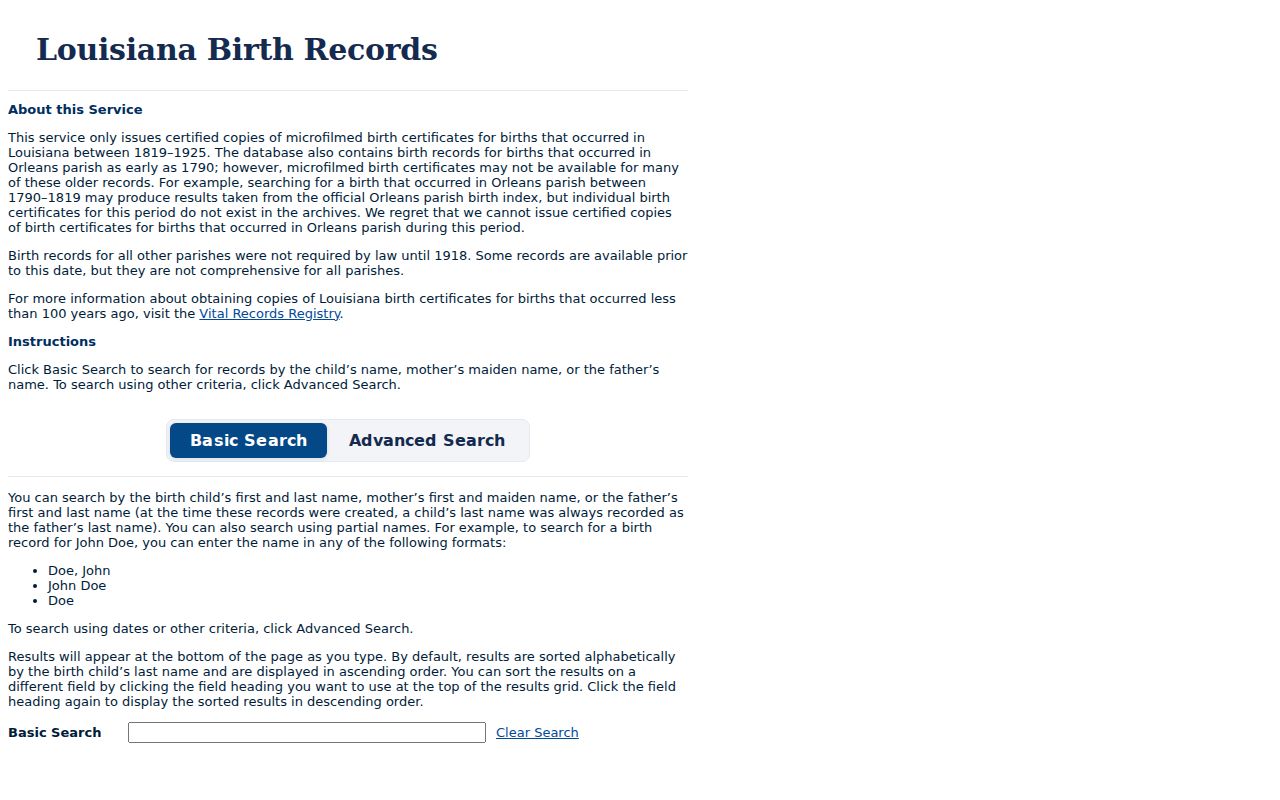
The parish and parent fields help reduce false matches while keeping the query tied to a historical event.
LaPlace Heirs and Reunions
An heir search belongs in probate or succession records. Search by the deceased person's name, then ask the clerk for the index or file that shows the legal representative and party roles. A succession address is a filing contact, not proof of where an heir later lived. Obituaries, church records, and dated directories can support a family relationship, but each needs a second source.
Birth-parent and adoptee searches follow a different route. Louisiana adoption files are sealed. Eligible adults may use the DCFS Adoption Reunion Voluntary Registry, a passive mutual-consent program with confidential contact and counseling. Public address searches are not a substitute. Former classmates can be sought through St. John library yearbooks and newspaper databases; research found no official LaPlace alumni directory.
Insider tip. Record a source, date, role, parish, and confidence level for every name before combining two results.
Confirming LaPlace Business Links
The Louisiana Commercial Search accepts an entity name, charter number, trade registration or reservation number, and a first and last name for an officer or agent search. Results may show an entity, status, registered office, agent, or officer. That is a business-record connection. It does not show that an agent lives at the listed address or that a firm still operates at a LaPlace site.
A LaPlace trade name that is absent from the state search may be filed with the St. John Clerk because Louisiana DBAs are parish filings. Professional credentials go through the relevant board. The state licensing directory collects those official routes, while the Louisiana Real Estate Commission is one captured example with name, license number, company, phone, street, ZIP, city, and state fields.
When LaPlace Records Are Missing
Not every St. John record has a public name index. Narrow the request before contacting an office: state the record type, date span, address, case or parcel number, and the exact document wanted. For parish administrative material, use the St. John public-record request form. The parish asks for a description and picture identification showing date of birth, and it says records or a status notice will be supplied within five days when research is needed.
Clerk records follow the clerk's own request path. Historical family questions may require the State Library, State Archives, a church archive, or the German-Acadian Coast Historical and Genealogical Society. Keep the receipt or reply with the record. An office response that no record was found should remain a documented gap, not an invitation to merge the nearest same-name result.
Limits on LaPlace Resident Lookup
Public access is not unlimited. Louisiana election law shields Social Security and driver-license numbers, day and month of birth, mother's maiden name, electronic contact details, and specified military, overseas, and minor data. Juvenile, sealed, expunged, victim, and protected court material may also be withheld. Publish only the least information needed for a lawful family, civic, or personal-safety question.
The Louisiana Address Confidentiality Program gives eligible relocated survivors a substitute address for qualifying public transactions. A no-match or substitute address does not show that a person left LaPlace. Never try to reverse it through parcels, maps, voter files, or neighbors. If an official record is wrong, contact its custodian and keep the correction separate from any commercial directory opt-out.
Lawful use. A LaPlace resident lookup is for lawful personal research. Never use a record to stalk, harass, intimidate, or expose a protected person.