
LaPlace Previous Residents by Era
Start with the source closest to the target date. Recent ownership begins with the assessor and deed index. A middle-century household may require a telephone or address-order directory, if a local volume can be found. Public census schedules and older church or colonial records take over farther back. Exact online cutoff years for St. John land images were not published in the reviewed official sources, so the table avoids a false promise.
| Source | Years It Covers | Where Held | What It Shows |
|---|---|---|---|
| Assessor and GIS | Current roll; historical start unconfirmed | St. John Parish Assessor | Parcel, situs, owner display, legal description clues |
| Conveyance index and deeds | Exact online cutoff unconfirmed | Clerk and eClerks | Owners, instruments, and prior-record references |
| City or criss-cross directories | Exact LaPlace run unconfirmed | Parish and State libraries | Dated names or occupants when a volume exists |
| Federal census schedules | Public releases through 1950 | Library genealogy databases and NARA | Households and relationships at the census date |
| Colonial Original Acts | 1753-1798 | State Archives with Clerk permission | Property, succession, and civil context |
Ownership and residence are not the same when tracing previous residents. A deed names parties to a legal transfer, while a census or directory may name an occupant. Keep those claims in separate columns. When the date is uncertain, begin with the present parcel, then move backward one proven event at a time.
Fix the LaPlace Address First
The St. John Assessor search accepts an assessment number, parcel mapping number, owner or business name, physical street number, physical street name, and other street text. The result shell can include lot, block, legal description, physical address, subdivision, neighborhood, and ownership fields. Live coverage and field population were not confirmed, so save what appears on the actual record rather than relying on the generic shell.
The parish GIS adds parcels, addresses, streets, aerials, flood zones, precincts, zoning, and council districts. It is an assessment and location aid, not a legal survey. A notice says the assessor viewer moves to GeoSync on March 1, 2026, with preview accuracy not guaranteed. Preserve the legacy and new links while the transition is active. Confirm the legal description in the recorded instrument.
| Street number | Use the present situs number as a starting point |
|---|---|
| Street name | Test the core name without excess suffix text |
| Parcel number | Carry it into maps, tax records, and office requests |
| Legal description | Use lot, block, subdivision, or tract text to survive address changes |
Walk St. John Deeds Backward
The St. John Parish Clerk of Court keeps conveyance and mortgage records. Its land-record page routes researchers to eClerks, while the old local “Real Estate Transfers” feature is marked no longer available. eClerks supports free statewide parish discovery, though viewing or printing document images may require a parish subscription or purchase. Ask the Clerk for the St. John index and image cutoff before planning a long online search.
- Use the assessor and GIS to identify today's parcel, owner display, and legal description.
- Find that owner's acquisition instrument in the Clerk or eClerks index, using spelling variants and a date range.
- Read the image and save its instrument type, parties, date, book and page or instrument number, and prior-record reference.
- Search the seller as an earlier buyer, then follow the referenced instrument backward.
- When online coverage ends, contact the Clerk for books, older indexes, microfilm, and certified-copy options.
- Grantor and grantee
- The grantor transfers an interest; the grantee receives it.
- Chain of title
- The sequence of recorded transfers linking a parcel from one owner to the next.
- Legal description
- The lot, block, subdivision, tract, or boundary wording that identifies land more reliably than a street label.
LaPlace Deed Index Access
The eClerks statewide land index is the main online discovery route documented for St. John Parish. Search both grantor and grantee roles. A succession, donation, correction, judgment, mortgage release, plat, or affidavit may bridge what looks like a break in the sale sequence. Read the instrument itself because an index line rarely carries the full legal description or prior reference.
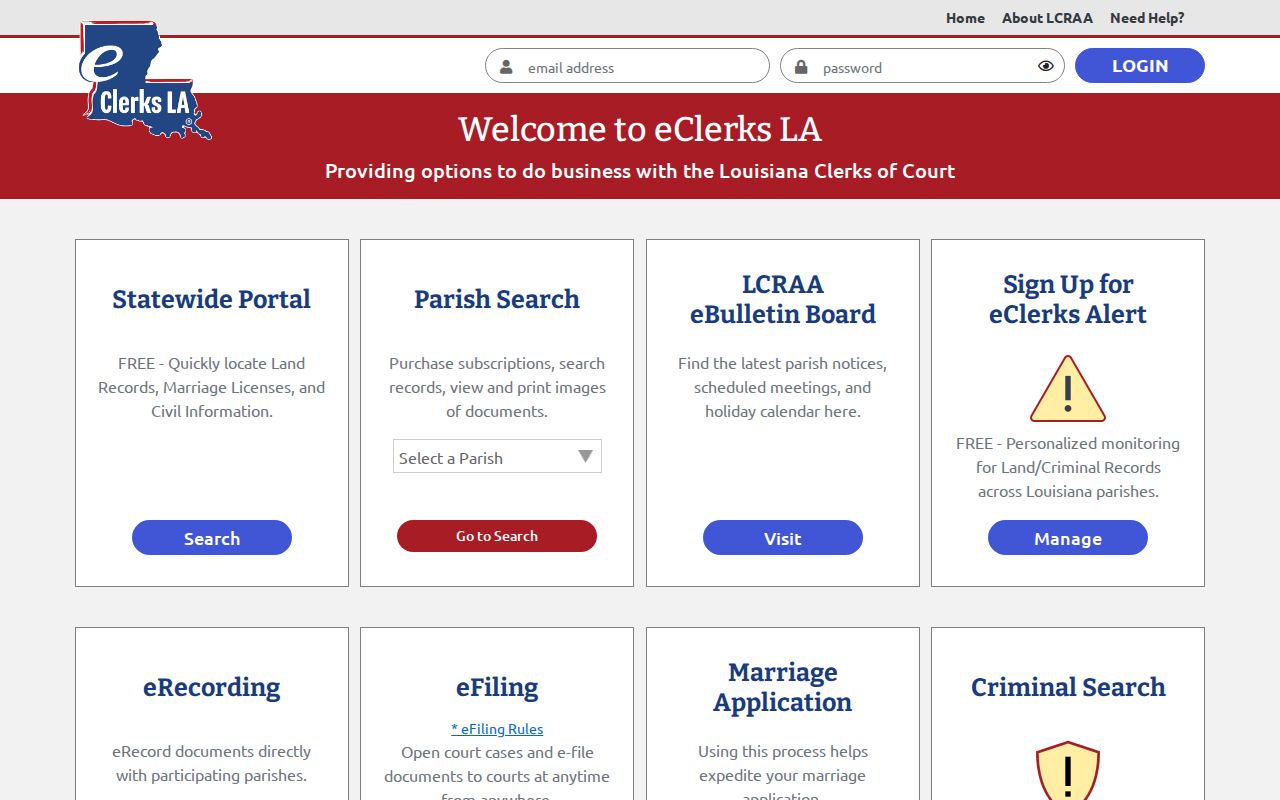
The captured statewide portal is the search entry point, but certified copies and older books still route to the St. John Parish Clerk.
The Clerk has an eastbank office at 1811 W. Airline Highway in LaPlace, 985-652-8041, and a westbank courthouse office in Edgard, 985-497-3331. Both list weekday hours from 8:30 a.m. to 4:30 p.m.; the LaPlace office closes from noon to 1 p.m. Confirm cost and access before requesting a large chain.
When LaPlace Deeds Leave Gaps
A missing sale does not end the address history. Property can pass through a succession, donation, partition, correction, or other instrument. Search every party found in the latest deed, then compare its legal description and prior-record citation. Entity names may appear in place of people. A change in owner spelling may be a clerical form, not a new person.
The statewide system launched in November 2015, but that is portal history, not the start date for St. John images. Do not turn it into a coverage claim. For earlier deeds, ask whether the Clerk can search by book, volume, instrument, party, or legal description and whether the needed material is in Edgard, LaPlace, or an archive.
LaPlace Past Residents at Libraries
The Louisiana State Library collection holds directories, genealogy, maps, newspapers, clippings, WPA files, and photographs. Its exact LaPlace residential-directory years were not located in the official catalog review. Ask by community, parish, year, and format. The St. John Parish Library offers Ancestry Library in the branch, HeritageQuest, HeritageHub, and other genealogy tools. These can connect census, obituary, land, probate, and directory clues.
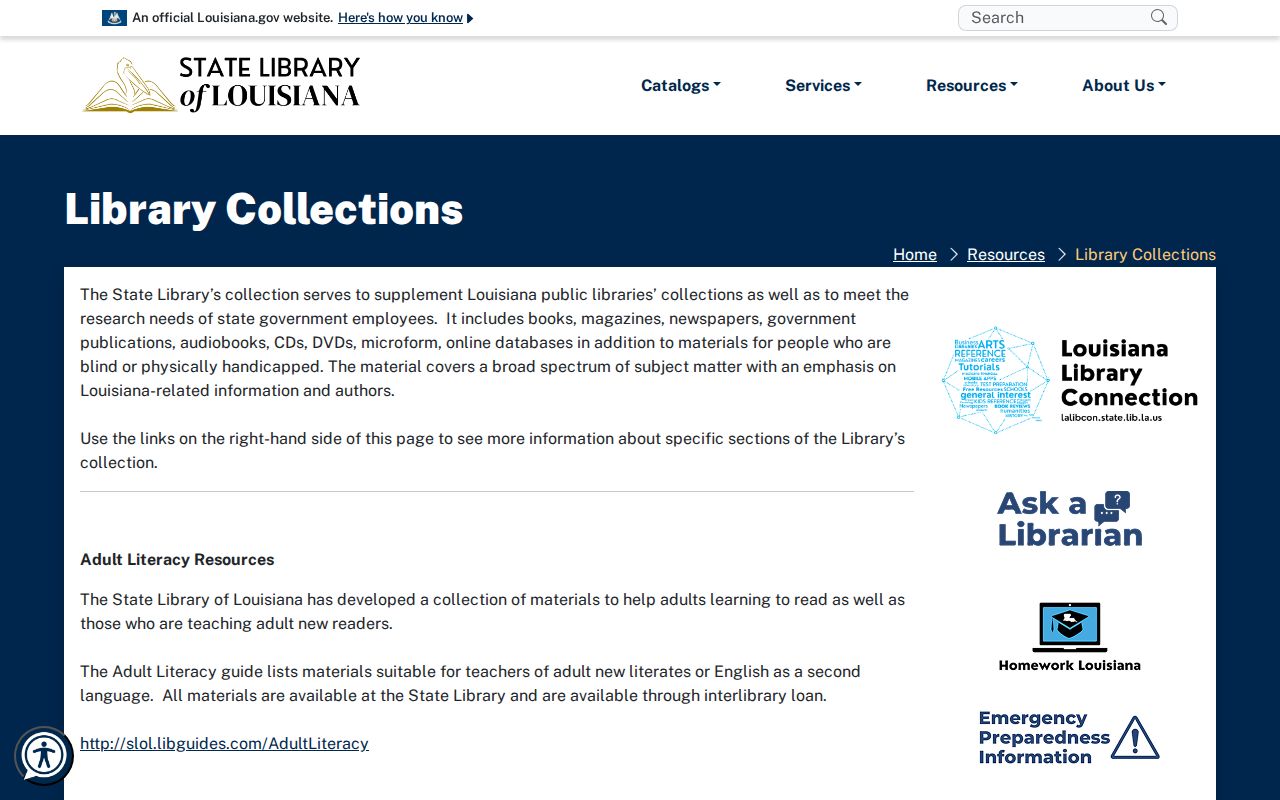
The State Library screen marks the broader collection route for previous residents. Reference staff can confirm a call number or explain that no matching local volume is held.
Older LaPlace Address Clues
Public census schedules extend household research through 1950. Pair the nearest census year with a directory or deed date, but account for the fact that census geography and street labels change. The State Archives lists St. John Colonial Records from the 1760s through 1798 and Original Acts from 1753 through 1798. Those acts can supply property, succession, and civil context when modern street numbers do not exist.
Church sources can also identify families before regular directory coverage. German Acadian Coast Historical and Genealogical Society materials point to Catholic sacramental books for 1718-1825, Archdiocesan Archives for requests from 1826-1900, and individual churches for later records. Treat the society as a lead and verify the record with the holding church or archive.
LaPlace Family Reconnection Records
An address history sometimes begins with a family reunion question rather than a parcel. Louisiana's official Adoption Reunion Voluntary Registry is the proper route for eligible people seeking a match tied to an adoption. It is voluntary and does not turn sealed adoption files into an open previous-residents directory. Follow the program's eligibility, identity, consent, and application rules instead of trying to work around protected records.
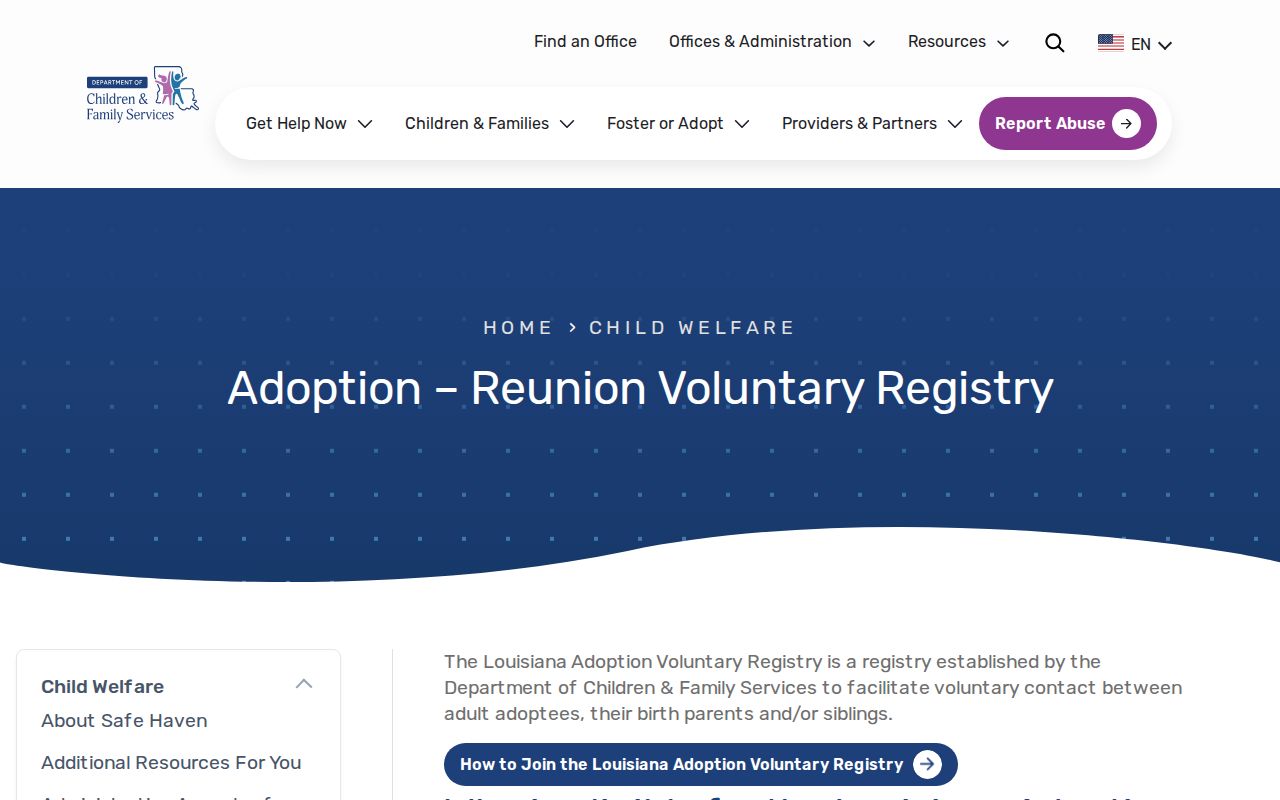
The official registry screen separates a lawful family-reconnection path from an open search for previous residents. Once a permitted match supplies a place or surname, public historical sources can provide context without exposing protected information.
Rebuild LaPlace Past Households
Owners are only one layer of previous residents. A directory, census, obituary, or church record may identify people who occupied an address without owning it. Exact LaPlace criss-cross years have not been confirmed, so ask the Parish and State libraries before assuming such a run exists. The historical shelf and database options are detailed on the LaPlace city directory collections page.
Use a simple flow: present address to parcel, parcel to legal description, legal description to deeds, deed dates to directory and census years, then household names to obituaries or successions. HeritageHub describes obituary and death-notice coverage from 1704 to the present at the provider level, but each local title and date must be checked. An obituary can explain a surname change or death; a succession can tie that event back to land.
A name disappearing from one source is not proof that previous residents moved. The edition may be missing, the person may be unlisted, or the address may have changed. Record “not found” with the exact source and date searched. That note prevents the same dead end from being treated as evidence later.
Lawful use. Research LaPlace previous residents for family or house history, and never use an address trail to stalk, harass, or harm a living person.