
Finding Residents Around LaPlace
No single resident roll covers LaPlace. LaPlace is unincorporated. Parish and state custodians hold the useful sources. Start from the fact you already know, since the assessor and GIS tools fit a street or an owner name, while the Louisiana Voter Portal takes a voter name and ZIP or a residential address. Clerk indexes tie people to deeds, mortgages, civil filings, marriages, and successions. For earlier generations, turn to the parish library, the State Library, the State Archives, and church-record custodians.
Each hit names a role. An assessor card names an owner or taxpayer. A deed names grantors and grantees. A court index shows parties, though renters, children, unregistered adults, and people using protected addresses may never appear. One directory entry captures a single moment, so treat identification as strong only when two or more records agree on name, place, and time.
- Confirm the address in the St. John Parish Assessor search and public GIS.
- Use the Louisiana Voter Portal when the question concerns a registered voter or precinct.
- Follow an owner name into the Clerk of Court land, civil, marriage, or succession index that fits the inquiry.
- For an earlier household, ask the parish or State Library for a dated directory, census, obituary, or local-history source.
- Request a narrow, named record from its custodian when no public index covers it.
LaPlace Resident Record Keepers
Three offices at the New Government Complex anchor LaPlace research. The Assessor lists property for annual taxes. The Clerk records land instruments and keeps court and marriage files. The Registrar manages voter records and corrections. Edgard remains the parish seat, and the westbank courthouse holds the 40th Judicial District Court. That split matters. A LaPlace filing may be accepted at the eastbank office yet routed to Edgard. The LaPlace street directory gives the full address-led sequence.
St. John Parish Clerk of Court
1811 W. Airline Hwy.
LaPlace, LA 70068
985-652-8041
St. John Parish Assessor
1811 W. Airline Hwy.
LaPlace, LA 70068
985-652-5311
St. John Registrar of Voters
1811 W. Airline Hwy.
LaPlace, LA 70068
985-359-0175
LaPlace Is Not a City
Jurisdiction is the first thing to settle. LaPlace is a census-designated community, not an incorporated municipality, and Louisiana uses parishes instead of counties. There is no LaPlace city clerk, city assessor, city court, municipal directory, or city cemetery database, because parish offices do the work a city office would handle elsewhere.
Postal identity adds a wrinkle. A LaPlace mailing label does not settle St. John Parish jurisdiction. ZIP 70068 even crosses parish lines. The State Library's city and town directory places Montz in neighboring St. Charles Parish while showing LaPlace as its postal place. Before treating any name as a LaPlace resident record, check the parish through GIS, an assessor parcel, a deed legal description, or the relevant records office.
Practical test. Treat “LaPlace” as a postal clue first, then confirm St. John Parish with a parcel, precinct, deed, or custodian record.
LaPlace Property Names and Addresses
The St. John Assessor search and the public GIS viewer are the fastest address tools. A parcel record links an address to an owner, assessment class, parcel number, and legal description. The map adds layers. Streets, aerials, flood zones, voting precincts, zoning, and council districts all appear. Neither proves who sleeps there. A mailing address may also differ from the situs address. Situs means the physical location.
A GIS transition is underway. The parish moves from the legacy system to GeoSync starting March 1, 2026. Keep both URLs handy while it settles. A map result is an aid, not a legal survey, so for ownership history or exact legal boundaries, carry the parcel or owner name into the Clerk's recorded instrument. The parish tax-payment search offers another address-based route, but the assessor and Clerk remain the sources for parcel facts and recorded ownership.
Current LaPlace Resident Directories
Today's directory is a set of official indexes rather than one household list. Coverage overlaps, but meanings differ. Search by role: owner, voter, or deed party. Court party, business officer, licensed professional, and person in custody round out the roles. A missing name in one roll says little about residence.
| LaPlace source | Recorded role | Custodian | Route |
|---|---|---|---|
| Assessment roll | Owner or taxpayer | Parish Assessor | Free property search |
| Voter lookup | Individual registered voter | Secretary of State and Registrar | Name or address form |
| Land index | Grantor, grantee, borrower, or lender | Clerk of Court | eClerks or office |
| Court index | Plaintiff, defendant, or case party | Clerk and 40th JDC | Confirm portal coverage or request |
| Business filing search | Entity, officer, or registered agent | Louisiana Secretary of State | Free commercial search |
Compare two independent roles for one person. Record their dates too. The LaPlace resident lookup gives the full name-first sequence, while commercial people-finder summaries work only as leads, never as substitutes for a custodian record, since they can be stale or merge namesakes.
Searching Louisiana Voter Records
The individual voter form asks for first name, last name, ZIP, and month and year of birth. The address form takes parish, house number, street name, ZIP, and an optional unit. These are verification tools, not a public download. The St. John Registrar can correct a record or answer questions the portal cannot resolve.
Louisiana law keeps some fields private. Protected items include full birth dates, driver-license and Social Security numbers, mother's maiden name, email and text data, and certain military or overseas mailing details. Address Confidentiality Program participants use a substitute address for qualifying public transactions. Never rebuild a protected home address from other records.
| Form | Useful fields | Best use |
|---|---|---|
| Individual | Name, ZIP, birth month/year | Confirm one registration |
| Address | Parish, number, street, ZIP, unit | Match an address to election geography |
| Registrar | Name and registration details | Resolve a mismatch or update |
LaPlace Courts Require a Fallback
The 40th Judicial District Court sits in Edgard and serves St. John Parish. Its website posts divisions, judges, calendars, forms, and hearing categories. What it does not publish is an official St. John party-name case search. The Clerk Connect interface you may encounter is a generic Louisiana civil shell. It accepts a suit number, surname, first name, attorney, date range, suit kind, or cause. None of that guarantees live coverage of St. John filings, so treat it as a possibility rather than a promise.
Confirm real access through the Clerk, eClerks, or Clerk Connect first. Ask directly about civil, family, probate, and criminal divisions. Ask also about archived books, certification, and copy fees. A case listing names a party and a filing date. It says nothing about current residence or guilt. Federal matters run through the Eastern District of Louisiana and PACER, which are separate systems entirely.
Requesting Unindexed LaPlace Records
St. John Parish Government keeps an online public-record request form for administrative records that have no public index. Fill in your name and contact details. Describe the document clearly and attach photo identification showing your date of birth. Keep the request tight: name the agency, the record type, any name or address variants, the date range, and the format you want.
Parish policy gives itself five days to answer a research-heavy request. That answer may be the records or simply a status notice. Posted charges add up quickly. Standard pages cost 25 cents each one-sided and 50 cents two-sided, with a $10 surcharge per 100 pages plus outside-source costs and possible service fees. Copies go out after written confirmation and advance payment. On-site review can also be scheduled. The broader right to inspect comes from Louisiana Public Records Law, La. R.S. 44:1 et seq., subject to its exemptions.
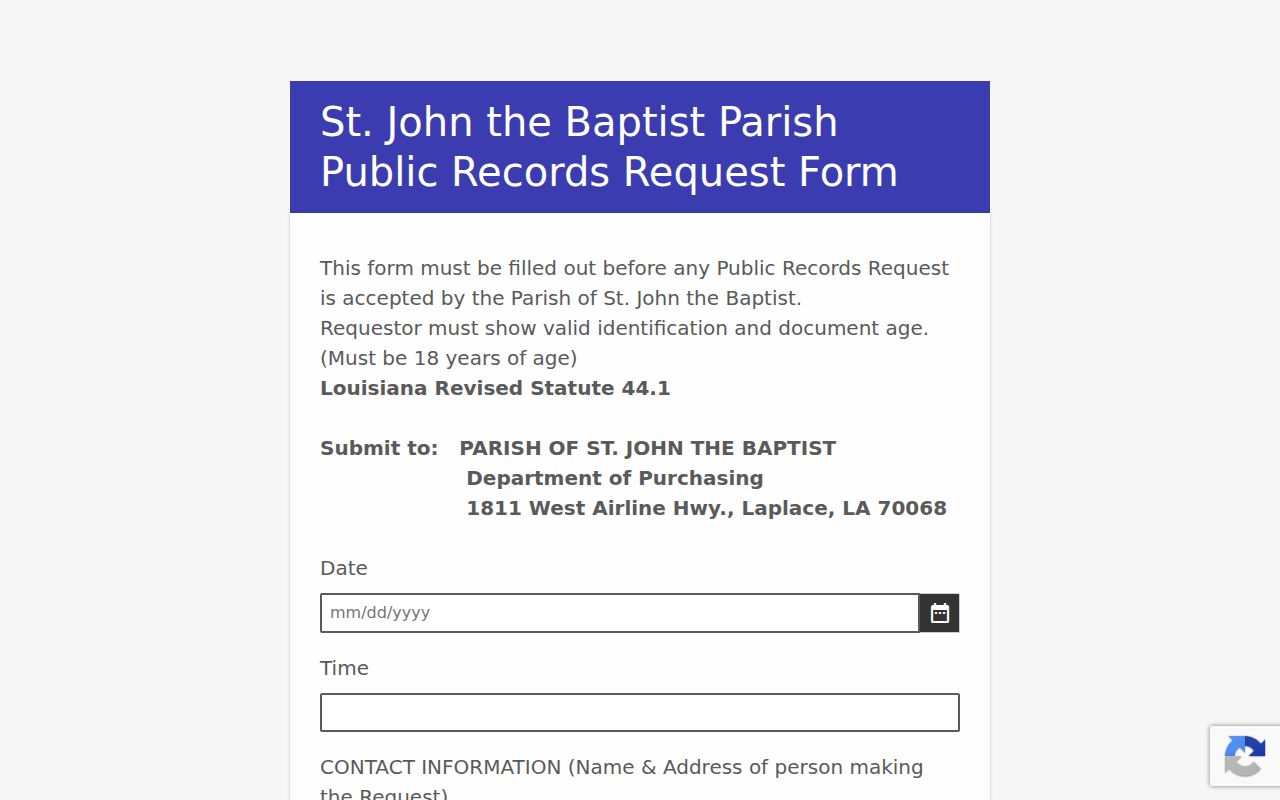
Use the description box to ask for one identifiable record, not an open-ended person search.
LaPlace Vital Record Boundaries
Louisiana splits its historical indexes from its confidential certificates. The Secretary of State birth index covers 1819 through 1925, with earlier Orleans entries, and takes names, parent names, parish, and date fields. The death index describes microfilmed deaths from 1911 through 1975, with exceptions. Marriage searching leans heavily toward Orleans and routes non-Orleans records to parish clerks. Treat every index hit as a lead.
The Department of Health keeps births confidential for 100 years and deaths for 50. Eligible relatives must apply, show identification, and pay fees. The St. John Clerk does offer certified Louisiana-born birth copies at the counter. That is a document service, not a name lookup. For adoption reunion, the state runs a confidential voluntary registry, which is the right door rather than public address records.
LaPlace Names in Business Records
The Louisiana Commercial Search takes an entity name, charter number, trade registration or reservation number, officer name, or agent name. It helps separate a person acting for a business from a name on a property roll or voter roll. That role distinction matters. A registered agent's public business contact does not establish a home address. Assuming it does is a common error. The official search page displays the lookup fields directly.
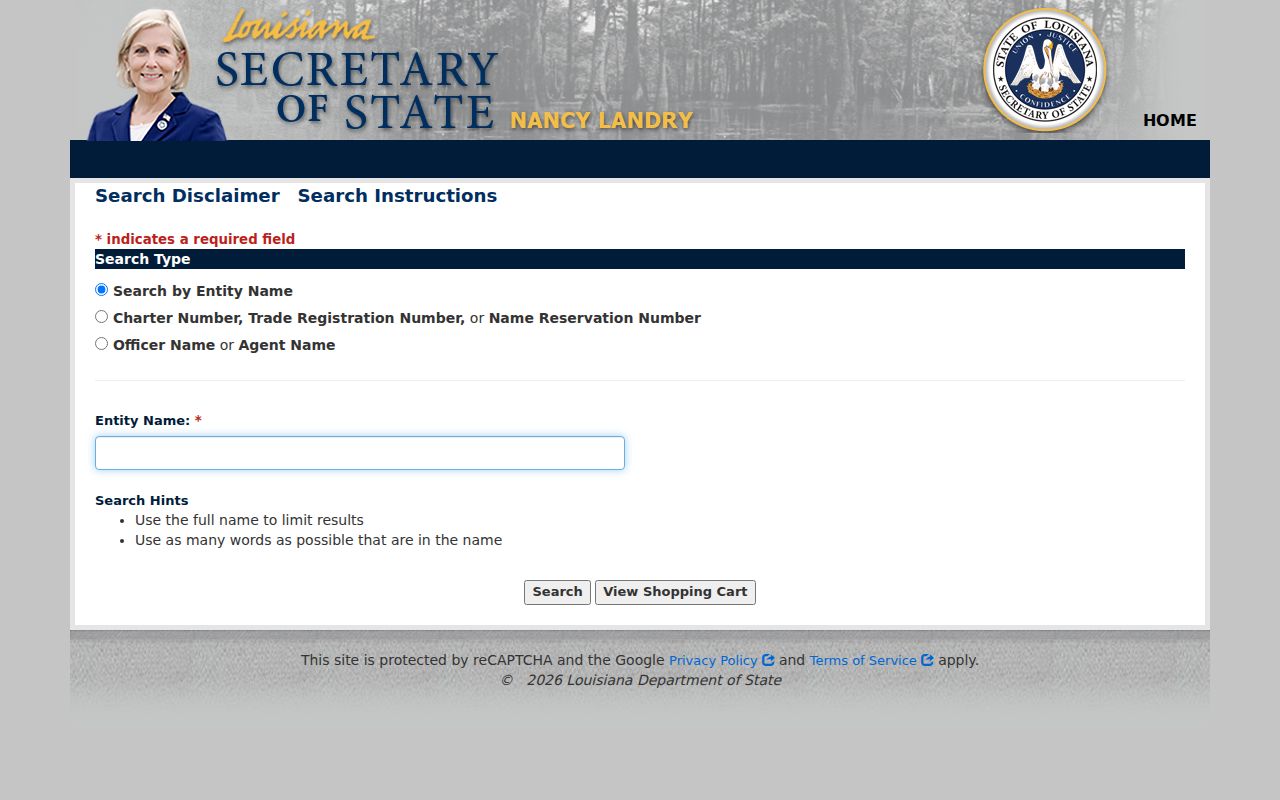
Pair any officer or agent match with the filing date and the full entity record. Only then decide it belongs to the person you are tracing.
LaPlace Custody Record Routes
Custody databases record a legal status, not a resident listing. The St. John Parish Sheriff links its Parish Prison roster from the official prison page. For state custody, the Louisiana DOC inmate information page leads to LA VINE. That service is free and anonymous, and it searches by location, name, ID, or case. Check identity carefully. An arrest is not a conviction. The DOC page routes you to LA VINE itself.
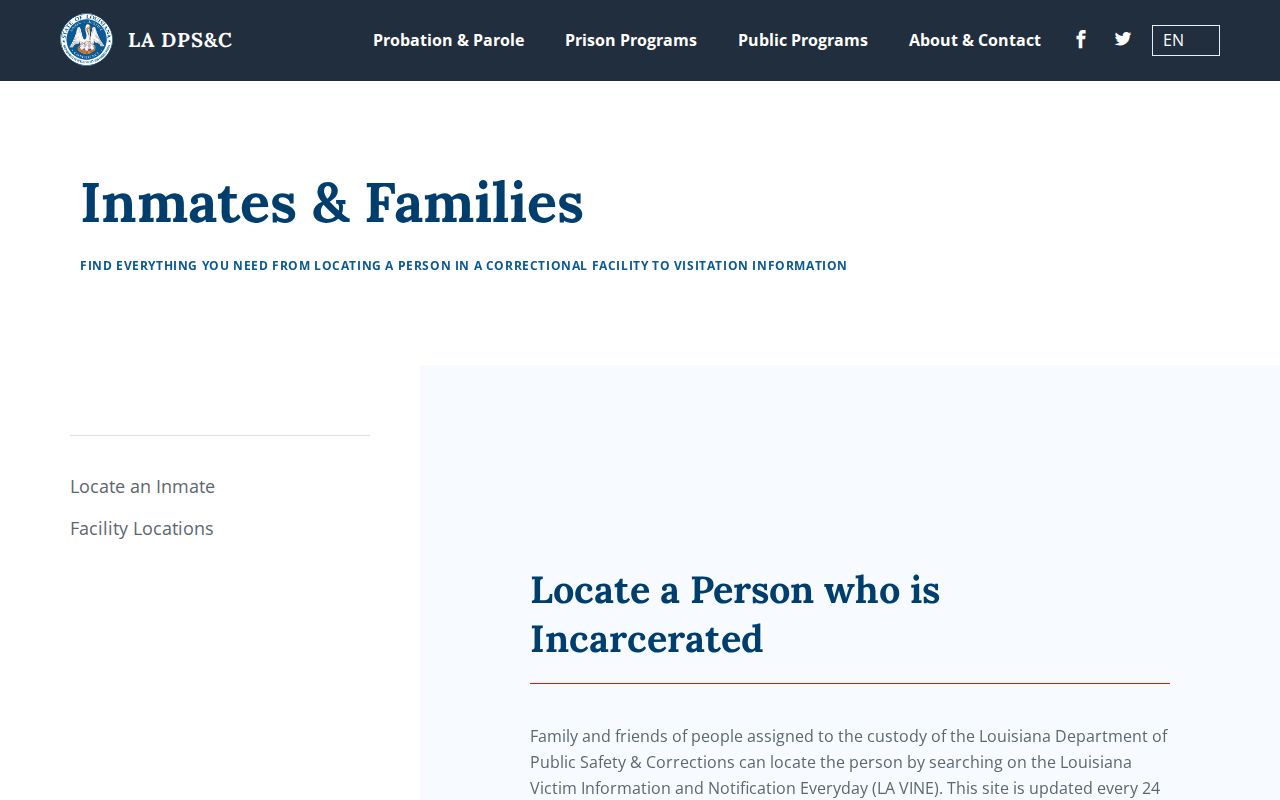
The statewide route sometimes fails to resolve a person. DOC also offers a phone path. Callers give a DPS&C number or a name plus birth date. The Sheriff-linked parish roster remains a separate local source.
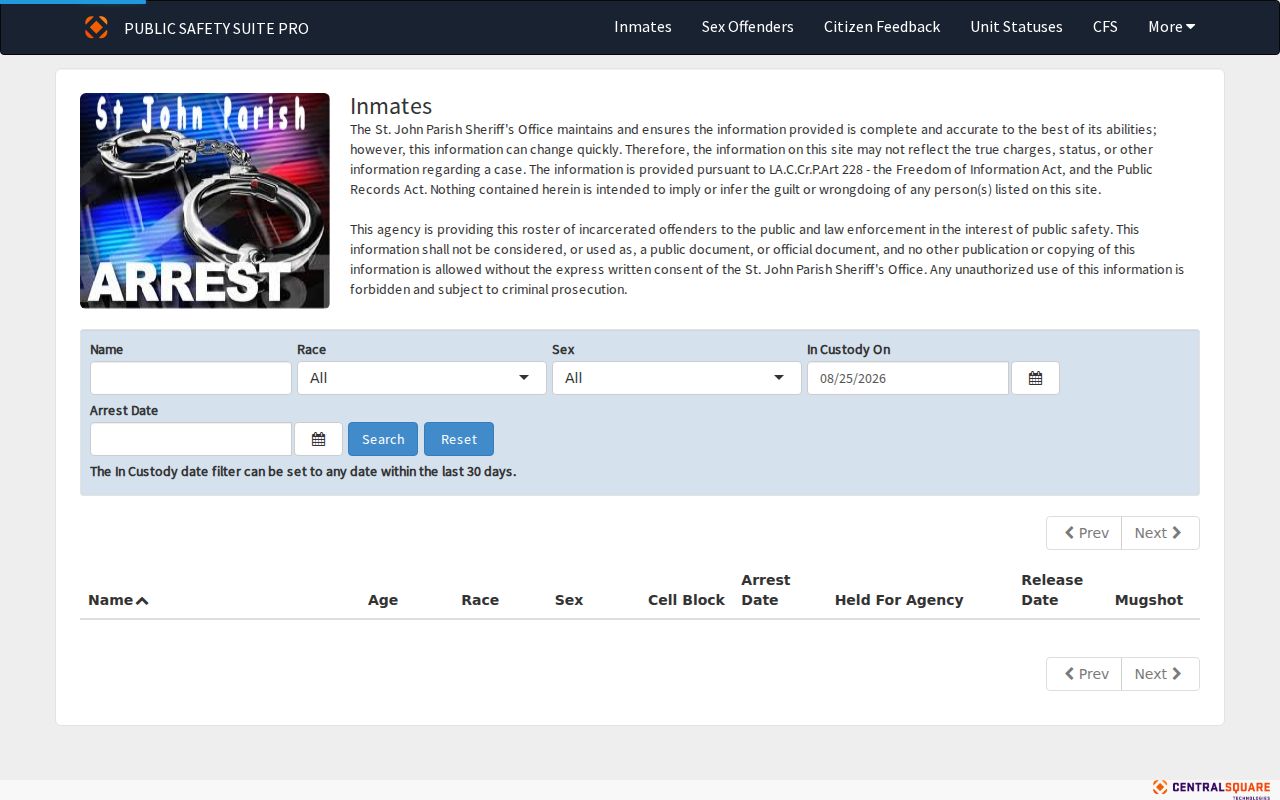
Roster results change constantly. Use the official Sheriff link and confirm current status directly with the jail.
Verifying LaPlace Professional Roles
A professional or public business role can separate namesakes without exposing a private address. Louisiana's licensing directory routes users to board-specific verification. The Louisiana Real Estate Commission public search is one documented example. Health Standards publishes facility and provider data. Check the named board, the status, the credential type, and the update date. A directory result alone is not proof of where someone lives. The real estate license form is one state verification route tied to an official custodian.
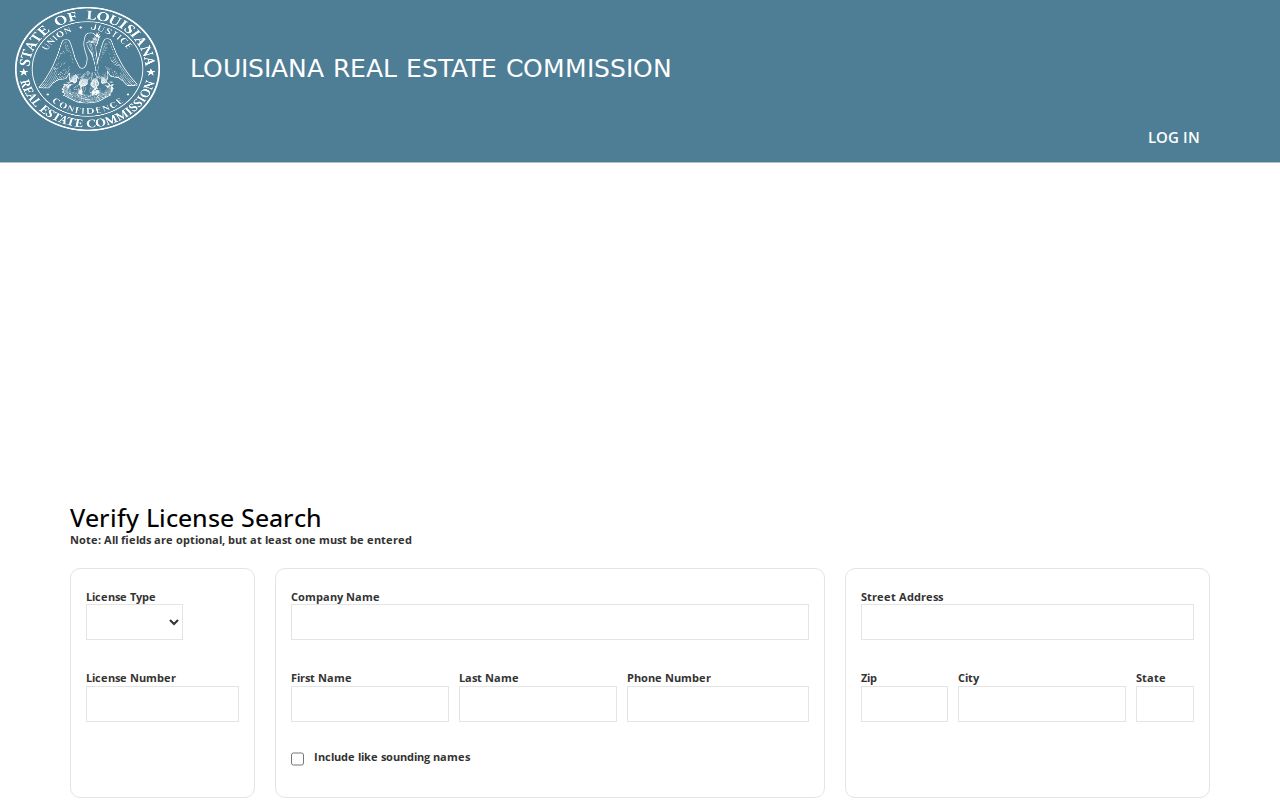
A license match establishes a regulated role. Pair it with a dated local record only when residence is genuinely relevant.
Legal Limits on LaPlace Lookups
Public access does not erase privacy. Louisiana's Address Confidentiality Program shields the actual address and phone of eligible survivors who relocate. They qualify because of abuse, sexual assault, or stalking. Voter, vital, driver, juvenile, sealed court, and active investigative records each carry their own restrictions. A public record can also be old, wrong, or attached to a namesake.
Use the minimum personal detail needed to distinguish records. Preserve the source URL, the access date, the recorded role, and the record date. Verify important facts with the custodian. Never use a directory, parcel map, or address trail to watch, threaten, harass, or harm anyone.
- Parcel
- A mapped unit of land used for assessment.
- Index
- A finding aid that points to a record; it is not the certified record.
- Grantor and grantee
- The parties transferring and receiving an interest in a deed.
- Situs address
- The physical location of property, which may differ from its mailing address.
Historical LaPlace Resident Directories
LaPlace never had a complete printed residential directory run that survives today. That gap shapes every search here. The St. John Parish Library compensates with strong in-house genealogy tools. These include Ancestry, HeritageQuest, HeritageHub, Fold3, African American genealogy resources, and the Louisiana Digital Library. The State Library's Louisiana Collection adds city directories, telephone books, newspapers, maps, photographs, and genealogical material. Reference staff can confirm which LaPlace years it actually holds.
One series that does span decades is the Louisiana State Government Telephone Directory. It is dated 2003 through at least 2022. Its 2018 LaPlace section covers public agencies and office addresses rather than private households. The Library of Congress reverse-directory guide explains how address-to-occupant books work. It also lists New Orleans holdings from 1966 to 1995. LaPlace itself falls outside that run. Resist the urge to treat neighboring coverage as a substitute, because it simply is not one.
Older St. John families have richer trails than modern directories offer. State Archives microfilm holds Colonial Records and Original Acts from 1753 to 1798. Clerk permission is required. Catholic sacramental records shift custody by era. The earliest sit in archive volumes. Records from 1826 through 1900 belong to the Archdiocesan Archives. Later ones stay with individual churches. Census returns, deeds, successions, obituaries, and church registers can rebuild a household when no city directory exists. The LaPlace city directory collections page maps those shelves and their limits in full.